

Ceiling Mold Removal in Middletown, OH
Middletown's position in the humid Ohio River Valley means sustained moisture levels throughout spring, summer, and fall create conditions where ceiling mold can develop in both older homes with basements and newer properties with crawl spaces—areas where ventilation gaps and moisture accumulation often go unnoticed until growth appears overhead. Ceiling mold requires prompt removal to protect indoor air quality and prevent structural damage to framing and insulation. Ladd Mold Remediation connects Middletown property owners with local mold removal providers who can assess ceiling affected areas, contain the problem safely, and restore affected spaces.
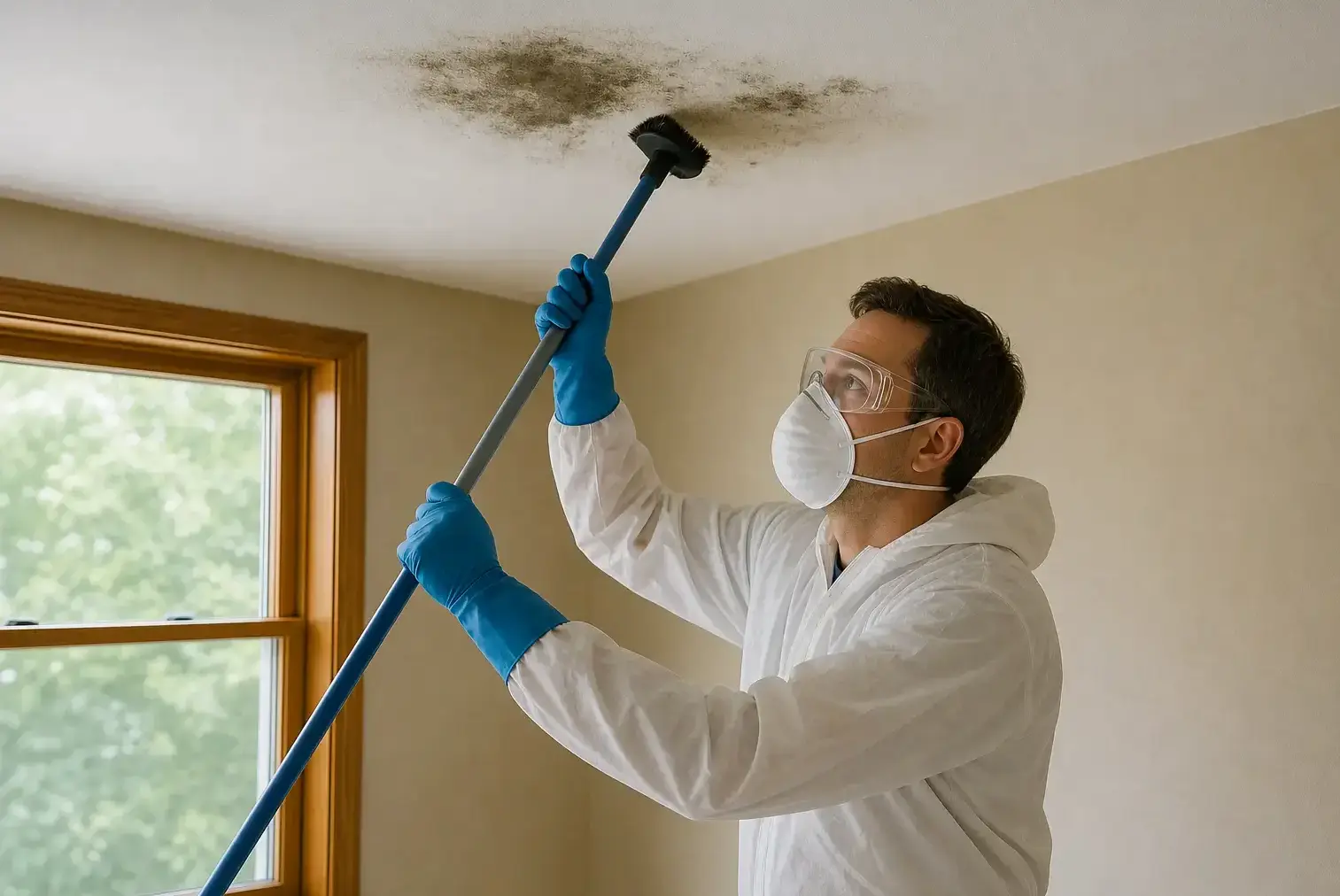
What gets cleaned on a ceiling, and what comes out
The honest answer to “does this come out, or can it be cleaned?” turns on two things — what the material is, and how many square feet are affected. Those are the two axes of the EPA’s own remediation table, reproduced below for the materials usually found on a ceiling.
| Material | Under 10 sq ftabout a cabinet door, or one ceiling tile | 10 to 100 sq ftroughly one wall, or a small bathroom | Over 100 sq ftmore than one room's worth of surface |
|---|---|---|---|
| Wallboardthe ceiling drywall itselfEPA, Table 2 | HEPA vacuum | HEPA vacuumRemove and discard | HEPA vacuumRemove and discard |
| Wood surfacesjoists and framing in the cavity aboveEPA, Table 2 | Wet vacuumDamp wipeHEPA vacuum | Wet vacuumDamp wipeHEPA vacuum | Wet vacuumDamp wipeHEPA vacuumRemove and discard |
What those methods mean, in EPA's words
- Wet vacuum
Wet vacuums are vacuum cleaners designed to collect water. They can be used to remove water from floors, carpets and hard surfaces where water has accumulated.
EPA, cleanup methods- Damp wipe
Mold can generally be removed from nonporous (hard) surfaces by wiping or scrubbing with water, or water and detergent.
EPA, cleanup methods- HEPA vacuum
HEPA (High-Efficiency Particulate Air) vacuums are recommended for final cleanup of remediation areas after materials have been thoroughly dried and contaminated materials removed.
EPA, cleanup methods- Remove and discard
Building materials and furnishings that are contaminated with mold growth and are not salvageable should be double-bagged using 6-mil polyethylene sheeting.
EPA, cleanup methods
Removed and replaced, whatever the area
- Ceiling tiles — drop-ceiling or acoustic tiles.
Discard and replace.
EPA, Table 1This is the action EPA's water-damage table gives for ceiling tiles. It is the one material here with no size threshold to weigh. - Fiberglass or other insulation — any insulation sitting on top of the ceiling.
Fiber glass, or any other insulation material that is wet or visibly moldy (or if an unacceptable odor is present) should be removed and replaced by a qualified heating and cooling system contractor.
EPA, air duct cleaningEPA states this in its heating-and-cooling guidance and it is quoted here as written. Its water-damage table reaches the same conclusion for both fiberglass and cellulose insulation.
These guidelines are for damage caused by clean water. If you know or suspect that the water source is contaminated with sewage, or chemical or biological pollutants, then Personal Protective Equipment and containment are required by OSHA.
EPA, Table 1Porous materials that are wet and have mold growing on them may have to be discarded.
EPA, cleanup methodsMold can grow on wood, drywall, carpet and furniture if they remain wet for more than 24 hours.
EPA, flood cleanup
Ceiling mold nearly always means water arriving from above — a roof, a supply or waste line, or a bathroom on the floor above. The ceiling is the symptom, so cleaning it without finding the source buys a few months at most. Drop-ceiling tile is the one material here with no decision to make: EPA's water-damage table lists it as discard and replace.
Days of an inch or more reach Middletown roughly 9.4 times a year, peaking in June.Source: NOAA 1991-2020 Climate Normals, FRANKLIN, OH US station (5.2 mi from Middletown)
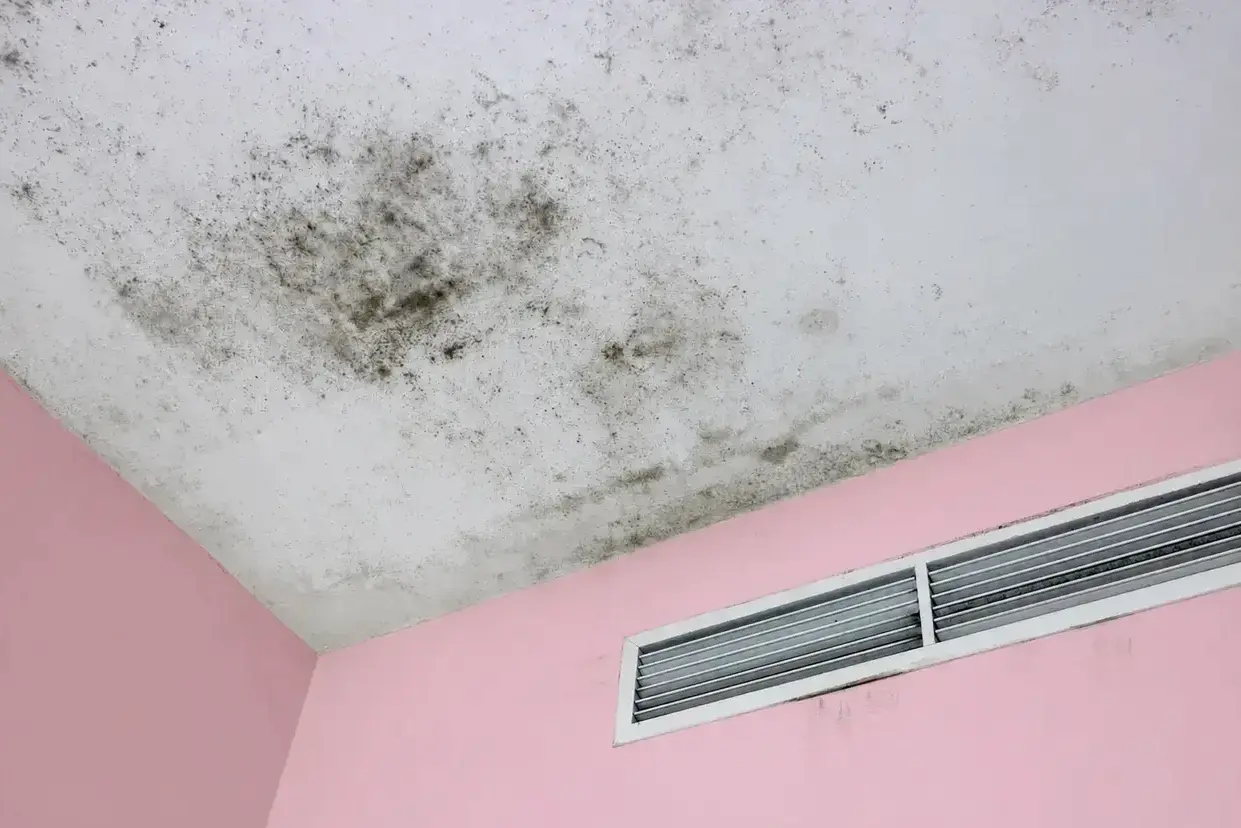
Ceiling Mold Removal Services for Middletown, OH Homes
Property owners throughout Middletown face a persistent challenge: the Ohio River Valley's humid climate creates conditions where moisture can accumulate indoors year-round, particularly during spring, summer, and fall. When humidity levels remain elevated inside homes and buildings, ceilings become vulnerable to mold growth—especially in older structures where ventilation may be limited or where basements and crawl spaces allow moisture to migrate upward. Ceiling mold is more than a cosmetic concern; it signals that moisture is present in your home, and addressing it quickly helps protect both the structural integrity of your property and the air quality your family or occupants breathe.
Ladd Mold Remediation connects Middletown property owners with independent local mold inspection and remediation providers who specialize in ceiling mold removal. These professionals begin with a thorough inspection to identify not just the mold itself, but the moisture source driving its growth—whether that's a roof leak, condensation, or humidity control issues. Once the source is understood, remediation work is performed with proper containment and safe removal techniques, followed by guidance on preventing recurrence. This comprehensive approach ensures that ceiling mold removal addresses the root problem, not just the visible growth, so you can move forward with confidence that your indoor environment is being restored.
Why Middletown Homeowners Trust Ladd for Ceiling Mold
Fast Local Ceiling Mold Response
Ladd connects you with independent local providers who understand Middletown's properties and respond quickly to ceiling mold concerns. Get your removal process started without long wait times.
Thorough Ceiling Mold Removal Process
Connected providers handle ceiling mold removal with careful containment and complete treatment. Clear communication throughout ensures you understand each step and feel confident in the outcome.
Experienced Ceiling Mold Specialists
Independent providers in the Ladd network bring deep experience removing ceiling mold from various home types and ages. They know how to address mold safely without spreading spores through your living spaces.
Middletown's Humidity, Year-Round Mold Risk
The Ohio River Valley's persistent humidity creates conditions where ceiling mold can develop across multiple seasons, not just after isolated wet events. Homes throughout Middletown—including those in areas like the Verity Historic District and Lincoln Park—face ongoing moisture exposure that supports mold growth without proper ventilation and moisture control.
Ladd connects property owners to local providers experienced in addressing ceiling mold driven by the region's sustained dampness, helping protect indoor air quality and structural integrity.
How The Ceiling Mold Removal Process Works
Connect with a Local Ceiling Mold Inspector
Tell us about the ceiling mold you've noticed, and we'll connect you with an independent local mold inspection provider in Middletown. They'll schedule a visit to assess the extent of ceiling mold growth and identify moisture sources driving it.
Get Your Ceiling Mold Evaluated
The local provider inspects your ceiling mold, checks for hidden moisture in walls and above-ceiling spaces, and documents the affected area. High humidity common across Ohio's spring and summer months creates persistent moisture conditions that support ceiling mold growth, especially in homes where ventilation or sealing needs attention.
Begin Ceiling Mold Removal
Once you've reviewed the inspection findings, your provider will outline a ceiling mold removal plan tailored to your home. They'll handle containment, removal of affected materials, and moisture control to reduce the likelihood of ceiling mold returning to that space.
Dealing with Ceiling Mold Removal in Middletown? Get fast, professional help.
Call Now — (513) 995-6331Ceiling Mold Removal Serving Middletown and Nearby Areas
Middletown's location in the Ohio River Valley creates persistent moisture conditions that make ceiling mold a common concern across the city's diverse housing stock. The region experiences high humidity levels throughout spring, summer, and fall—not as isolated wet-weather events, but as an ongoing atmospheric condition. This sustained moisture, combined with temperature fluctuations typical of the season, creates ideal conditions for mold to develop on ceilings, particularly where ventilation is inadequate or roof leaks have gone unaddressed. Older established neighborhoods and historic districts like Poast Town and the Verity Historic District often feature homes with aging roofing systems and original construction that may lack modern moisture barriers, making ceiling mold removal especially important in those areas.
Newer subdivisions across Middletown present different but equally relevant moisture challenges. These properties often include crawl spaces where moisture can accumulate and travel upward into framing and ceiling cavities without proper sealing or ventilation, creating hidden pathways for mold growth above living spaces. Whether a home is decades old or recently built, the persistent humidity in the area means ceiling mold can develop steadily over time. The independent local providers in our network understand how Middletown's climate and construction styles intersect to create these moisture vulnerabilities, helping property owners address ceiling mold before it affects indoor air quality and structural integrity.
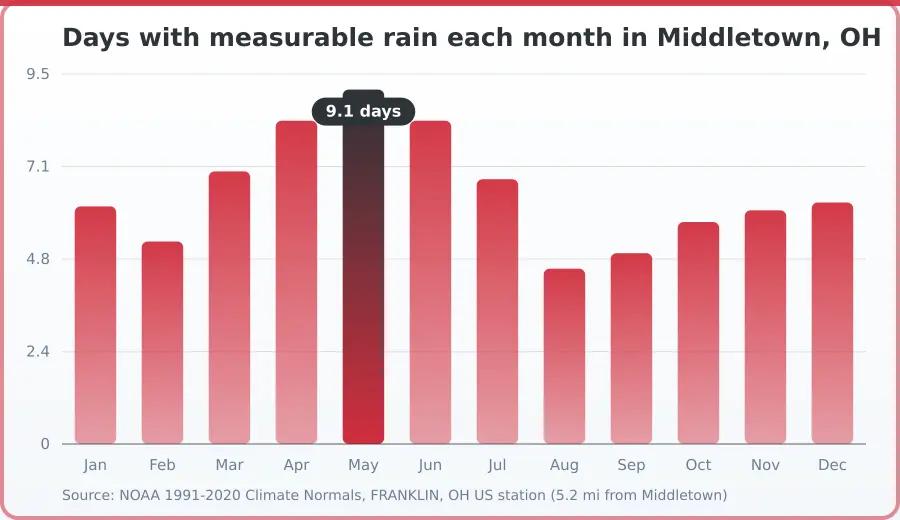
| Period | Days with measurable rain by month (days) |
|---|---|
| Jan | 6.1 |
| Feb | 5.2 |
| Mar | 7 |
| Apr | 8.3 |
| May | 9.1 |
| Jun | 8.3 |
| Jul | 6.8 |
| Aug | 4.5 |
| Sep | 4.9 |
| Oct | 5.7 |
| Nov | 6 |
| Dec | 6.2 |
Source: NOAA 1991-2020 Climate Normals, FRANKLIN, OH US station (5.2 mi from Middletown). Retrieved October 5, 2026.
Seasonal Ceiling Mold Removal Challenges in Middletown
Spring: Rising Moisture
Spring thaw and increased rainfall elevate indoor humidity, creating ideal conditions for ceiling mold to develop in attics, bathrooms, and upper-story spaces. Ladd Mold Remediation connects Middletown property owners with local providers who inspect and remove active ceiling mold before warm months accelerate growth.
Summer: Persistent Humidity
The Ohio River Valley's persistently high relative humidity throughout summer causes ceiling mold to flourish in poorly ventilated areas, particularly in older homes throughout neighborhoods like the Verity Historic District. Local providers accessed through Ladd address visible mold and underlying moisture sources to protect indoor air quality.
Fall: Temperature Swings
Fluctuating fall temperatures cause condensation buildup on ceilings and attic framing, accelerating mold colonization in spaces where ventilation is inadequate. Ladd connects you with local removal specialists who eliminate established ceiling mold and assess ventilation to prevent winter-season spread.
Winter: Hidden Growth
Winter heating creates warm-cold boundary conditions in attics and upper floors, trapping moisture that feeds hidden ceiling mold growth behind insulation and drywall. Early detection and removal through Ladd's network of local providers prevents structural damage and air-quality problems when the home is sealed tight.
Related Services
Ceiling Mold Removal FAQs — Middletown, OH
Ceiling mold removal typically begins with a thorough inspection to identify the extent of mold growth and its source—often moisture intrusion or inadequate ventilation. The independent provider will contain the affected area, remove contaminated materials safely, address the underlying moisture problem, and restore the ceiling. The exact approach depends on mold severity and whether structural damage has occurred.
Ladd Mold Remediation connects Middletown property owners with local removal providers who typically respond quickly to initial inquiries. Once you're matched with a provider, they can schedule an inspection and discuss timeline options based on the scope of your ceiling mold issue. Contact your local provider directly to learn their availability for your situation.
Ceiling mold removal costs depend on the affected area's size, mold depth into ceiling materials, whether structural repairs are needed, and how accessible the problem is. Additional factors include the underlying moisture source and whether testing or remediation documentation is required. Each independent provider sets their own pricing; request a quote from your matched local provider for a specific estimate.
Clear the area below and around affected ceiling sections to give the provider safe working space. Discuss containment procedures with your provider beforehand—they may seal off the room to prevent spore spread. Ask about ventilation needs during and after work, and whether you should vacate certain areas. Your provider will give specific prep instructions when scheduling.
Fix roof leaks, gutters, and exterior water entry points promptly. Ensure bathrooms and kitchens have adequate exhaust ventilation that vents outdoors. Monitor indoor humidity levels and improve air circulation in problem areas. After removal, maintain the moisture control measures your provider recommends. Regular inspections help catch new moisture issues before mold returns.
Middletown's humid climate allows moisture to persist throughout spring, summer, and fall, making ceilings vulnerable to mold growth without proper ventilation and moisture control. High indoor humidity combined with roof leaks or poor attic sealing creates ideal conditions for ceiling mold. Prompt removal and moisture management are essential to protect indoor air quality and prevent recurring problems in this region.
Homeowner Safety Toolkit
Verify Your Middletown, OH Mold Remediation Company
Before you hire anyone, use these independent national resources to confirm credentials, standards, and track record.
BBB
Look up any mold remediation company's complaint history, customer reviews, and accreditation status — a free, independent check before you hire.
Check StandingCDC
Covers the health effects of mold exposure and safe cleanup practices, separate from the remediation work itself — useful if anyone in the home has respiratory symptoms.
Mold Health GuideIICRC
Publishes the S520 standard for professional mold remediation. Confirm a company's technicians hold real, current IICRC certification before you hire them.
Verify CertificationDealing with Ceiling Mold Removal in Middletown, OH? Call (513) 995-6331 for 24/7 help.
Call Now — (513) 995-6331Areas We Serve in Middletown, Ohio
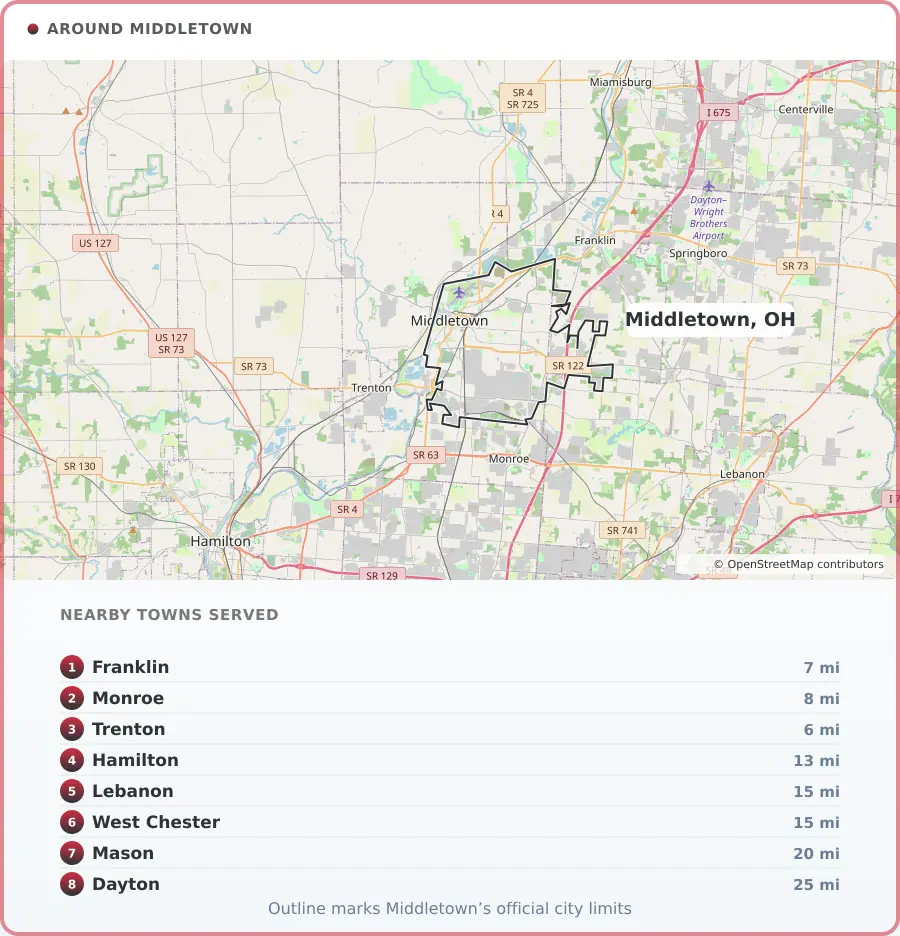
Middletown, OH is the centre of the service area, which extends to 8 surrounding towns. The map shows how far that reaches.
Middletown, OH Information
Set along the I-75 corridor between Cincinnati and Dayton, Middletown, OH has long been a steel town at heart, built up around the sprawling works now run by Cleveland-Cliffs. That manufacturing backbone still shapes the local economy, but healthcare, education, and logistics have steadily grown alongside it, with Premier Health's Atrium Medical Center and Middletown City Schools ranking among the area's largest employers. With roughly 51,000 residents, it's a city sized for familiarity rather than sprawl.
Walk through the Verity Historic District or Oakland Historic District and you'll see the brick-and-timber pride of an earlier industrial era still standing strong. Middletown's character comes from that blend of hardworking tradition and steady reinvention, a river-and-rail town that keeps finding new reasons to grow.

Photo: Billy Hathorn, CC BY-SA 3.0